Saffron is one of the world's most prized spices, also known as "red gold" for its intense aroma, flavor, and high culinary value. However, few people truly understand the cultivation process and, especially, the fundamental role of the saffron bulb.
To learn more about this process, we spoke with the producers at Azafranes Jiloca, specialists in the traditional cultivation of saffron in the Jiloca region (Teruel). In this interview, they explain how the bulbs are prepared, how they are planted, what care they need, and how flower production evolves over the years.
If you are interested in saffron cultivation, are thinking of starting a plantation, or simply want to learn more about this unique spice, here you will find direct information from experienced producers.
The Origin of Saffron: The Bulb
When people talk about saffron, many immediately think of the spice, but it all begins much earlier: with the saffron bulb.
Unlike other plants, saffron is not grown from seeds. Crocus sativus, the plant that produces saffron, reproduces through bulbs that generate the flowers from which the stigmas that form the spice are extracted.
How Organic Bulbs Are Prepared and Selected
Producers explain that the bulbs are primarily classified by size.
Small bulbs are usually planted under irrigation during the first year to encourage their growth. After this initial cycle, many of them develop into larger bulbs, ready for dryland farming.
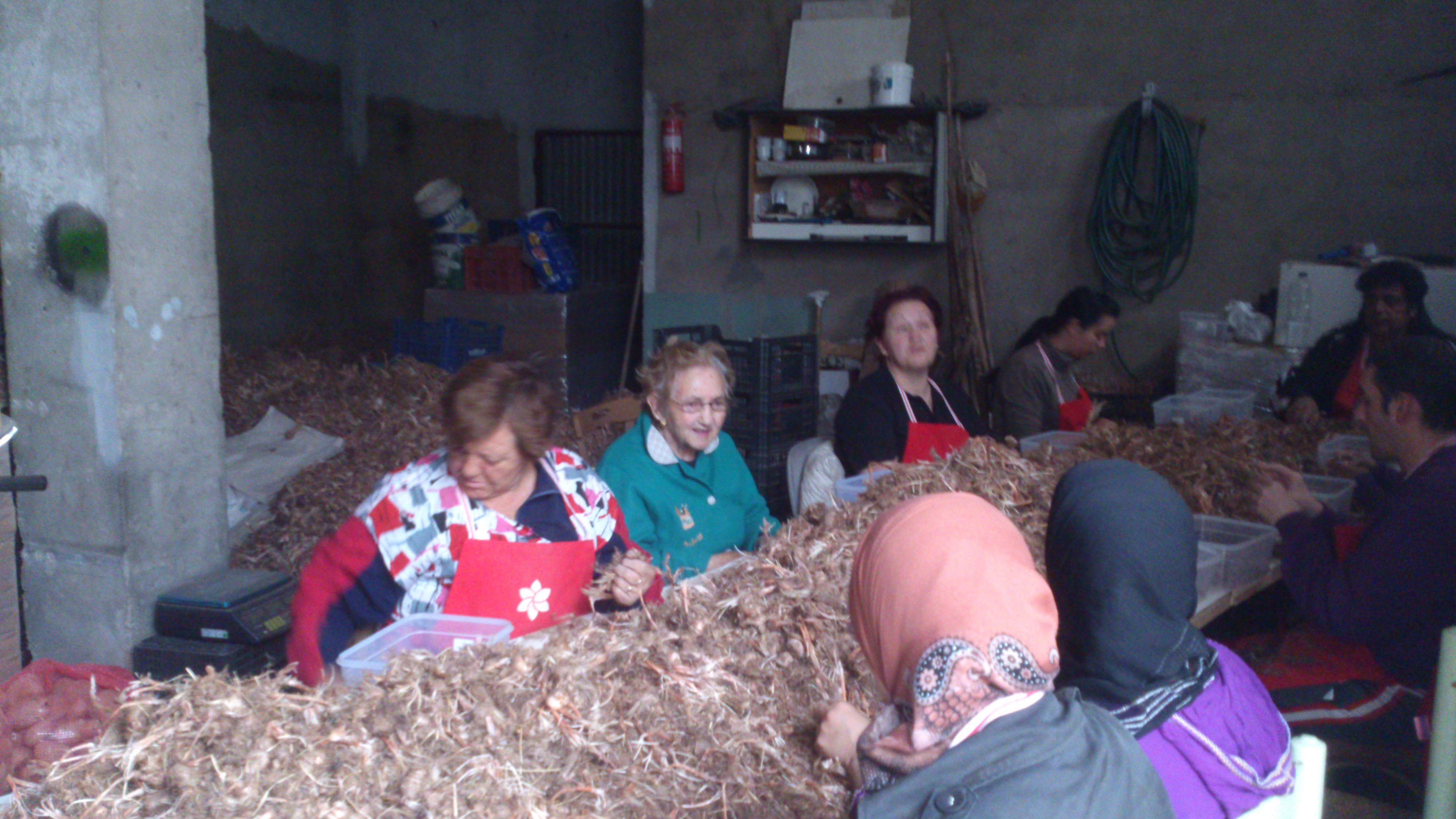
Before planting, a manual cleaning and selection process is carried out:
removal of soil
inspection of each bulb
discarding of damaged bulbs
This process ensures that only healthy bulbs are used for planting.
How to store bulbs before planting
Keep in mind that we are talking about organic saffron, so nothing can be added to help preserve the bulbs. Therefore, they must be stored under very specific conditions to maintain their viability.
Recommendations from producers:
Keep them in a cool, dry place.
Avoid direct sunlight.
Do not pile them up.
Place them spread out and well-ventilated.
If stored improperly, fungi can appear, which can damage the bulb and affect future production.
Saffron cultivation: dryland vs. irrigated
Traditionally, saffron is cultivated in dryland conditions, although it can also be grown under irrigation.
Producers in the Jiloca region explain that dryland saffron generally offers higher quality, although this depends heavily on annual rainfall.
One of the most interesting characteristics of saffron cultivation is its cycle:
From May to October, the plant remains dormant.
Flowering occurs in autumn (October-November).
The leaves then grow until spring.
How the bulbs are harvested from the field
Although mechanized methods exist, many small producers still use traditional methods.
The process consists of:
Opening a furrow with a plow.
Turning the soil.
Pulling the bulb to the surface.
Harvesting it by hand.
It is very physical work that is usually done by several family members.
Comments (0)
New comment