Your cart
There are no more items in your cart
- -20%

There are references dating back to the year 2300 BC, from this date onwards there are varied and diverse references to its use in religious rites and ceremonies, in medicine, gastronomy, etc.
In Greek and Roman literature, saffron is frequently cited and what is said in such works demonstrates that both the smell and the color played an important role in the refined life of classical antiquity. It was used very frequently as a dye, party dresses were dyed with saffron and saffron was spread on the floor of the rooms where celebrations were held, they even stuffed cushions in the room as aromatic points. They consumed it to fall asleep, perfume the baths and as an aphrodisiac, for this reason they spread it on the bed of newly married women, saffron was also thrown as the emperors passed by.
A definitive identification of saffron dates back to 1700 BC. in a painting in the palace of Hinos at Knossos on the island of Crete.
In the 4th century BC. The main cultivation area was on the Mediterranean coasts of Türkiye and England.
In Egypt around 1000 BC. Saffron was used in embalming, being the coloring of shrouds where the mummies were covered, yellow for women and red for men.
At this time the Greeks considered it a very sensual perfume, they spread it in halls, courtyards, theaters and in the Roman baths, the streets of Rome were sprayed with saffron when Nero entered the City.
In the Middle Ages, saffron had extraordinary importance in the commercial concept, the main trading center for the spice was Venice and the main buyers came from Germany.
Special and armed employees who formed a group called Ufficio dello Zafferano, were in charge of inspecting the merchants and ensuring that the merchandise was not adulterated. The penalties for counterfeiting saffron were very severe, even paying with their life.
In the 8th and 9th centuries, Muslim culture introduced the cultivation of saffron in Spain and at the end of the Middle Ages, which coincides with the discovery of America in 1492, is when it can be said that saffron reached worldwide commercialization.
In Monreal, the cultivation of saffron was the true economic engine of the town until the 1980s. Thanks to the spice, many families married their children, bought their homes, agricultural machinery, etc., from the 1980s onwards it gradually declined. until the 90s, the year in which its cultivation suffered a severe crisis and 85% of the cultivated area suddenly disappeared.
The reason for the crisis was that prices fell due to the entry of imported saffron grown with much cheaper labor than the national one, the marketers seeking to be more competitive even stopped cultivating their own fields and leaving the farmers in a situation of abandonment. national farmers.
The crisis that they themselves caused by failing to take into account the crops of our land today has turned against them since Iran, with a production of 90% of the world's saffron, has prohibited the sale of the bulb abroad, causing the lack of the spice with the consequent increase in price and forcing them to market their country in large quantities.
At the beginning of the 80s, THE SAFFRON MUSEUM was built in Monreal del Campo, where you can find all types of tools that were and continue to be used for the collection of this appreciated spice.
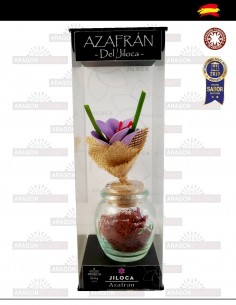
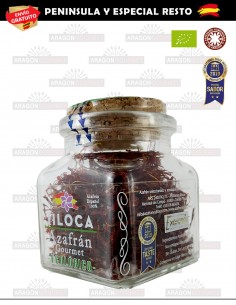
In 2005 they named Jiloca Saffron a Slow Food Presidium, taking it to the Hall of Taste in Turin (Italy), where it obtained the best analysis of all the saffrons presented. Given that the saffron is of unsurpassed quality but is also In danger of extinction due to the few remaining producers, the Jiloca Saffron Producers Association was formed to preserve this product so that we can continue enjoying its great aroma and great flavor.
Currently there is great recognition of Spanish saffron, its high quality is known and appreciated throughout the world, technological advances are being applied in cultivation and it could be said that it is no longer in danger of disappearing, but there is still a long way to go. to go to make it a real alternative so that many families can make farming a decent way of life.