Your cart
There are no more items in your cart
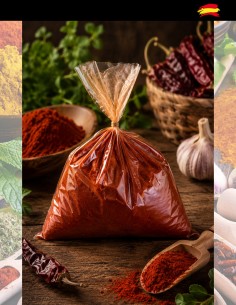

Different questions about this spice so used nowadays
- Where to buy paprika Will you see it?
- What types of paprika are there?
- What is the cultivation of paprika like?
- What uses has the paprika on the side?
The pepper from which the paprika comes from Peru and Bolivia, was a staple food for the aborigines of the place with different culinary uses, Cristóbal Colón was the one who brought the plant to Spain on his third trip "1493 " assuming it would be a possible substitute of the pepper that was imported from the East.
In Cáceres, the Jerónimos friars of Monasterio de Guadalupe were the ones who started growing the plant and n Spain, they arrived at Monasterio de Yuste, from where they moved to Murcia through the Convent of this order in La Ñora.
Both Cáceres and Murcia are two zones very important in terms of the industry that generates the paprika, although the paprika resulting from each of them is different due to the different dehydration systems carried out.
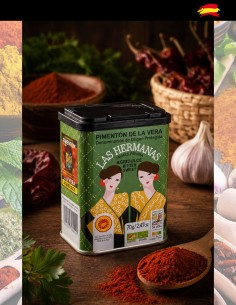
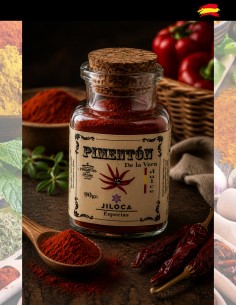
In AragonGourmet.com we put your layout here the best paprika from Vera
At the end of the decade of the eighties the paprika sector located in Extremadura was going through a crisis which meant a great reduction of the surface dedicated to the cultivation of the pepper, but the amount of paprika marketed did not suffer such a crisis since it was maintained or even increased, being the paprika sold from other origins.
Given this circumstance solutions were sought to protect dried paprika typical of the region and that had more quality than what was marketed in a general way.
 In 1989 the Regulatory Council was created and after a few years of processing was achieved, in 1998 , the Designation of Origin Paprika from the Vera , this was a protectionist guarantee for the producers of the area who saw how their paprika was recognized under a brand common that was going to differentiate it significantly from other peppers becoming, the one of the Vera, in a unique product and with some parameters of quality well specified.
The regulation of the Denomination of Origin defines the "Pade la Vera "as" the product obtained from the grinding of dried fruits of the genus Capsicum and Cerasiforme or Longum fully ripe, free of fungi and insects, with the characteristic color of the variety, harvested with dry matter superior to 15% and dehydrated with smoke by the traditional system de la Vera "
Thanks to the push of the D.O. and the conviction of obtaining a First Quality product year after year, the Paprika from the Vera is recognized as the best in the world and today.
There are more than 600 farmers dedicated to this crop in the province of Cáceres being more than 35 locations where you can find the cultivation of different varieties of pepper.
Peppers have been cultivated for decades and over time they have been
differentiated according to the area of cultivation. the sweet and semi-spherical types to which they are called "Bola" and the sweet and sour ones that are elongated peppers and of variable pungency "Different degrees of itching".
Through a careful selection they were obtained, in the ecotype "Agridulce de la Vera" the
varieties Jaranda, Jariza and Jeromín different in size and flavor (sweet, bittersweet and spicy), the most characteristic is the intense red color of the pepper, the low content in seed and the low thickness of the meat, which facilitates better smoke drying.
Planting begins at end of February and should end at the beginning of April .
Rows are made where the plants from the seedbeds are placed (normally it is what c Every farmer will make his nursery), the transplant is made between May 15 and 10 June giving a density of 40,000 plantation plants per hectare .
The most common irrigation is drip irrigation to be localized, water is saved and it is also used to make fertilization through of the water.
The harvest of the fruit is done manually and is understood from mid
September to the end of October .
The drying of the paprika of the Vera is the first stage of the elaboration , it is carried out in dryers
of vertical current and thanks to the gases caused by the slow combustion of embers of oak and oak.
The dryer is formed by two heights, the one below is the combustion zone, in the second 
the pepper is placed in a 70 - 80ctm thick layer. Heat and smoke rise by convection between a network of pine strips to dry the fruit.
The drying process lasts for 15 days and the humidity of the pepper is reduced from 80% to 15% , with the slow drying process it is possible to maintain the content of carotenoids or even increase it
This artisan drying system requires a large consumption of firewood , more or less than 0.8kg
for every 1 kilo of pepper.
The smoke-drying gives paprika de la Vera a great stability of color, taste and smoked aroma, which means a differentiation from paprika from other sources
Its use is very widespread for the preparation of sausages such as chorizo, chistorra, sobrasada, etc., also for pickles such as mussels, sardines, mackerel, chicken, etc. In the day-to-day kitchen it is very useful hoisted , in the recipes that are most commonly used in paprika is Galician octopus, patatas bravas and vegetable stews, in the paella also it is recurrent to add a pinch.
In the international kitchen it is also known as paprika and it is common to find it in the
purée of chickpeas or eggplant, the famous Hungarian goulash or in Portuguese rice dishes.
Comments (0)
New comment